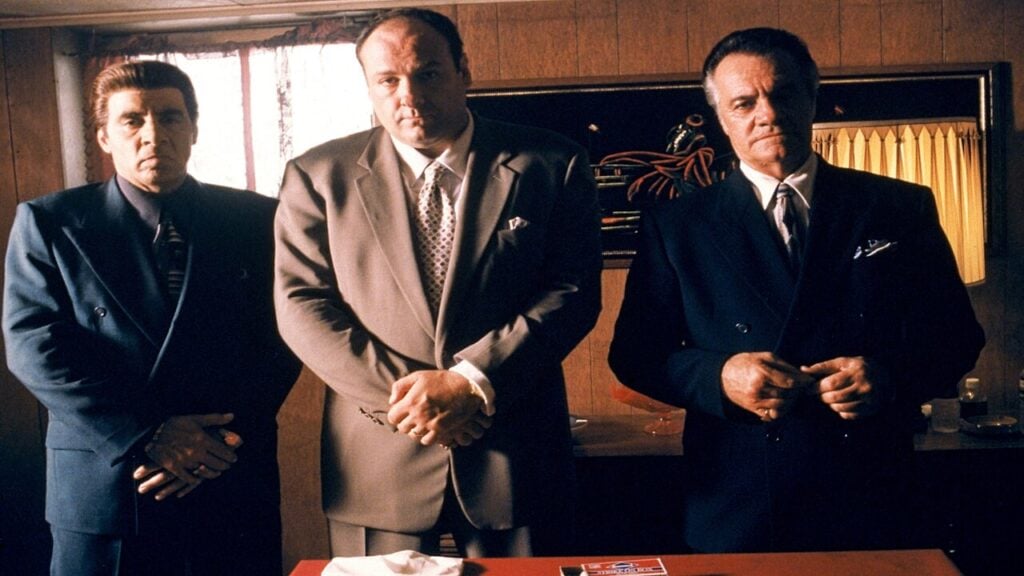
A family of ducks lands in a swimming pool in North Caldwell, New Jersey, stays a while, and then flies away, and the man who had been feeding them collapses at a barbecue. That is the inciting incident of The Sopranos, which premiered on HBO on 10 January 1999, and David Chase never gave viewers a cleaner statement of what the show was doing. Tony Soprano runs a criminal organization and sees a psychiatrist because his body keeps reacting to feelings he refuses to name. Eighty-six episodes later it ended in a diner booth with a cut to black, and the argument about that final scene has outlasted most of the shows that came after it.
The cast is unusually good raw material for a personality quiz because Chase built almost every character around a gap between how they see themselves and how they behave. Tony believes he is a father holding two families together and is, in practice, the source of most of the damage in both. Carmela knows exactly where the money comes from, takes it to a priest, and keeps the house. Christopher Moltisanti wants to be a filmmaker, writes a screenplay, gets a horror movie made, and cannot stop sabotaging himself long enough to enjoy any of it. Dr. Jennifer Melfi is the only person in the series with the clinical language to describe what is in front of her and spends years deciding whether describing it is enough.
The crew fills out a wide range of temperaments. Paulie “Walnuts” Gualtieri is superstitious, easily offended, funny by accident, and the least reliable narrator of his own courage. Silvio Dante, played by Steven Van Zandt, is the consigliere who runs the club, gives measured advice, and does Godfather impressions on request. Junior Soprano carries a lifetime of resentment at being passed over and defends his standing long past the point where it means anything. Ralph Cifaretto is the one nobody defends, cruel in a way the others find genuinely unsettling. Vito Spatafore earns more than anyone and lives with a secret the organization will not tolerate. Carlo Gervasi is the quiet earner whose loyalty turns out to be conditional.
The women outside the crew are drawn just as sharply. Adriana La Cerva is warm, unguarded and trapped between two sides that both expect her to lie. Meadow Soprano grows from a bright teenager into someone constructing careful intellectual arguments for a family business she once condemned.
The questions here deal with loyalty, ambition, self-justification, what you do when somebody you love does something indefensible, and how honest you are with yourself about your own motives. That is the material the series works with, so the answers sort along lines that matter rather than along favorite quotes. Each outcome comes with an explanation of which responses drove it, which tends to be more interesting than the name itself.
Possible results:
- Tony Soprano
- Adriana La Cerva
- Carmela Soprano
- Meadow Soprano
- Paulie ‘Walnuts’ Gualtieri
- Christopher Moltisanti
- Junior Soprano
- Silvio Dante
- Vito Spatafore
- Ralph Cifaretto
- Carlo Gervasi
- Jennifer Melfi