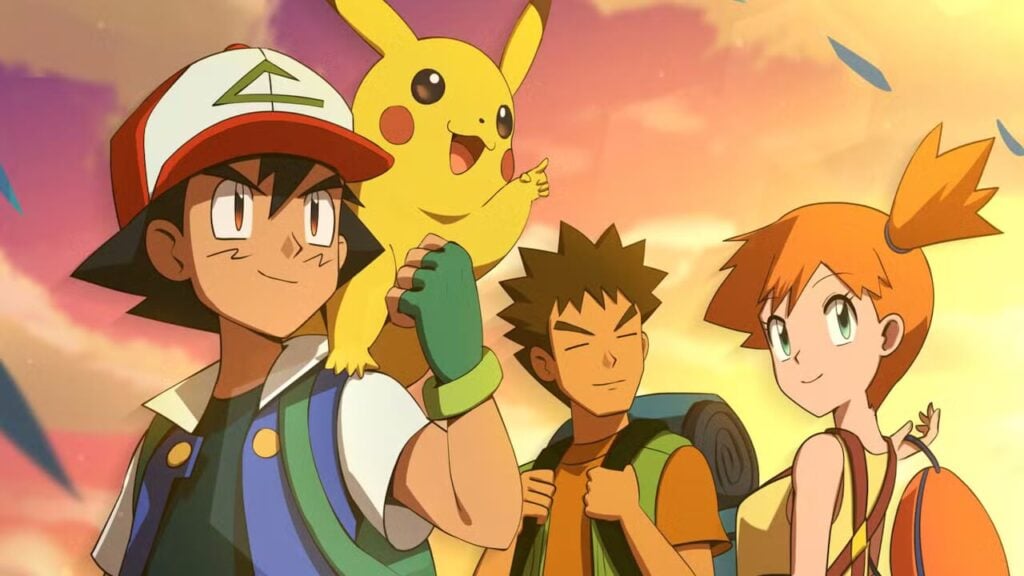
Satoshi Tajiri spent his childhood collecting insects in the fields around Machida, west of Tokyo, and watched those fields disappear under apartment blocks as the area was developed. The idea he eventually built from that memory was a game about catching creatures and trading them with a friend, which is why the Game Boy link cable mattered so much to the original design. Pokemon Red and Green reached Japanese shops on February 27, 1996, after roughly six years of development that nearly bankrupted Game Freak, and the anime followed in April 1997. Thirty years on, the species count has passed a thousand.
Ken Sugimori and the design teams that followed him gave nearly every creature a small behavioral hook rather than only a type and a stat line, which is what makes an outcome from this list feel like a description rather than a label. Snorlax weighs over a thousand pounds and sleeps across roads because nothing has ever given it a reason to move. Mimikyu hides under a badly stitched Pikachu costume because it watched a mascot get all the affection and decided to try that instead. Rayquaza lives in the ozone layer and only descends when two other legendary creatures start wrecking the planet. Mewtwo was engineered in a laboratory from Mew’s genetic material and has spent every appearance since working out what it owes anyone.
The fifty results run across every generation and cover very different temperaments. Charizard is the flashy, proud one that takes a while to respect anybody. Bulbasaur is the steady, quietly reliable starter that solves problems without drawing attention. Eevee is unresolved potential, the creature with more evolutionary paths than any other, and its branches land in distinct places: Umbreon is calm, nocturnal, and defensive, Glaceon is cool and precise, Sylveon is affectionate and disarming in a fight. Pikachu is the sociable, high-energy option, chosen as the franchise mascot partly because focus groups responded to the design.
Elsewhere the list rewards other instincts. Lucario reads the emotions of everyone in the room through aura and is unusually principled about it. Gardening-quiet Snom and cheerful Alcremie sit at the gentle end, while Hydreigon, Garchomp and Tyranitar occupy the blunt, powerful end where diplomacy is not the first tool. Greninja and Zoroark both work through misdirection rather than force. Corviknight is the dependable one that other people literally travel on, since the Galar region uses them as taxis. Mudkip, Cyndaquil, Piplup and Rowlet each carry the specific charm of a starter that has not yet decided what it will become.
The questions cover energy level, how you handle conflict, whether you prefer company or space, and what you do when someone stronger challenges you. The result is not a ranking of power, and a legendary outcome is not a better one. Snorlax has been happy the entire time, which is more than can be said for Mewtwo.
Possible results:
- Charizard
- Pikachu
- Bulbasaur
- Eevee
- Dragonite
- Mew
- Mewtwo
- Snorlax
- Umbreon
- Tyranitar
- Lugia
- Scizor
- Cyndaquil
- Rayquaza
- Flygon
- Sceptile
- Blaziken
- Mudkip
- Jirachi
- Lucario
- Garchomp
- Luxray
- Piplup
- Infernape
- Glaceon
- Chandelure
- Zoroark
- Hydreigon
- Volcarona
- Haxorus
- Greninja
- Sylveon
- Aegislash
- Noivern
- Goodra
- Talonflame
- Mimikyu
- Rowlet
- Decidueye
- Lycanroc
- Zeraora
- Incineroar
- Golisopod
- Primarina
- Dragapult
- Toxtricity
- Corviknight
- Snom
- Alcremie
- Cinderace