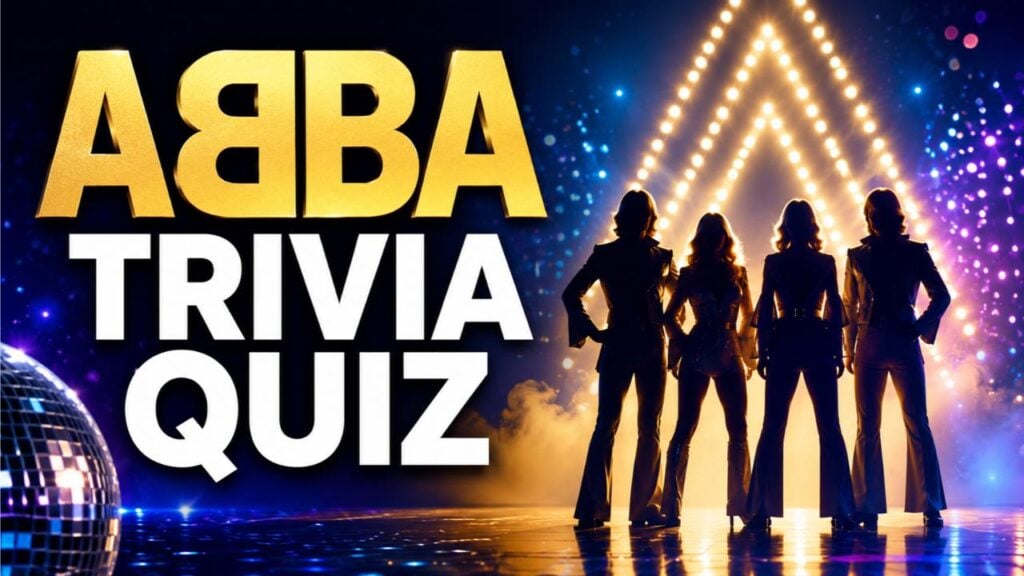
ABBA won the Eurovision Song Contest in 1974 with a song about a historic military defeat turned into an unabashedly upbeat pop anthem, and that one contest victory launched a Swedish quartet into one of the best-selling pop acts in history, built on an unusual internal structure: two married couples writing, producing, and performing together, and lyrics that grew more complicated as those same marriages quietly fell apart.
The engineer Michael B. Tretow read a book about Phil Spector’s production methods and then tried to reproduce that density on a Stockholm budget, recording a backing track, nudging the tape speed slightly off, and recording the whole thing again on top of itself so the instruments landed a fraction out of tune with their own copies. The result, first used on the 1973 single Ring Ring, is the shimmering thickness that runs through everything the group recorded afterwards, and it explains why ABBA records sound larger than the four people making them. Benny Andersson and Björn Ulvaeus wrote and produced almost the entire catalog, stacking Agnetha Fältskog and Anni-Frid Lyngstad’s voices in layers rather than treating either as a fixed lead, and by 1978 the group had built Polar Music Studios in Stockholm partly so they could keep working at that level of control without renting anyone else’s room.
The songs got sadder as the marriages ended, and the group kept releasing them anyway. Björn and Agnetha separated in 1978 and divorced the following year; Benny and Frida married in 1978 and divorced in 1981. The Winner Takes It All, released in 1980, arrived with Agnetha singing a lyric about a marriage ending that Björn wrote after his own, a division of labor that most bands would find unworkable and this one treated as a normal Tuesday in the studio. Even Dancing Queen, which the group premiered in June 1976 at a gala on the eve of the Swedish king’s wedding, carries an undertow of something ending rather than beginning once the words are read on their own.
The afterlife has been more lucrative than the original run. ABBA Gold, compiled in 1992, has sold in the region of thirty million copies and put the catalog in front of people born after the group stopped touring. Mamma Mia opened in the West End in 1999 and became a global theatrical fixture, then a 2008 film. The band reportedly turned down an offer of around a billion dollars to reunite for a tour in 2000, held the line for another two decades, and then released Voyage in November 2021, their first album in forty years, followed by a London concert residency in which motion-captured digital versions of their younger selves perform in a purpose-built arena.
Smaller details tend to separate the committed listeners from everyone else. The group’s name, assembled from the four first initials, required negotiating with a Swedish fish canning company already trading as Abba. The UK jury awarded Waterloo no points at all in Brighton, in front of a home audience, while the conductor for the Swedish entry stood in the pit dressed as Napoleon.
Casual listeners will handle the obvious material: Dancing Queen, the Swedish origins, the general status as pop institutions. The harder questions want specifics, like which song took the Eurovision title, who was married to whom and for how long, and what format allowed four people in their seventies to perform as themselves at twenty-eight. Check the score sheet waiting under the last question to see whether that knowledge holds up, half a century removed from Waterloo.
Questions Preview
- Norway
- Sweden
- Denmark
- Finland
- Dancing Queen
- Waterloo
- Mamma Mia
- SOS
- Three
- Four
- Five
- Two
- They were all siblings
- They consisted of two married couples
- They were childhood friends only
- They had no personal relationships among them
- Bjorn Ulvaeus and Benny Andersson
- Agnetha Faltskog and Anni-Frid Lyngstad
- Bjorn Ulvaeus and Agnetha Faltskog
- Benny Andersson and Anni-Frid Lyngstad
- Dancing Queen
- Fernando
- Money, Money, Money
- Chiquitita
- Mamma Mia!
- Rock of Ages
- Moulin Rouge!
- We Will Rock You
- ABBA Voyage
- ABBA Reborn
- ABBA Live Again
- ABBA Eternal
- Both marriages ended in divorce
- Both couples had children together
- Both couples remarried each other's partners
- Neither couple ever married
- SOS
- Waterloo
- Super Trouper
- Take a Chance on Me
- The first initials of each band member's first name
- A Swedish phrase meaning forever together
- An acronym for their record label
- A tribute to a religious hymn
- The 1960s
- The 1970s
- The 1980s
- The 1990s
- Mamma Mia
- Waterloo
- Voulez-Vous
- Money, Money, Money
- Agnetha Faltskog
- Anni-Frid Lyngstad
- Both sang lead equally on every song
- Neither, only the men sang lead
- Voyage
- Waterloo Revisited
- The Return
- Reunion