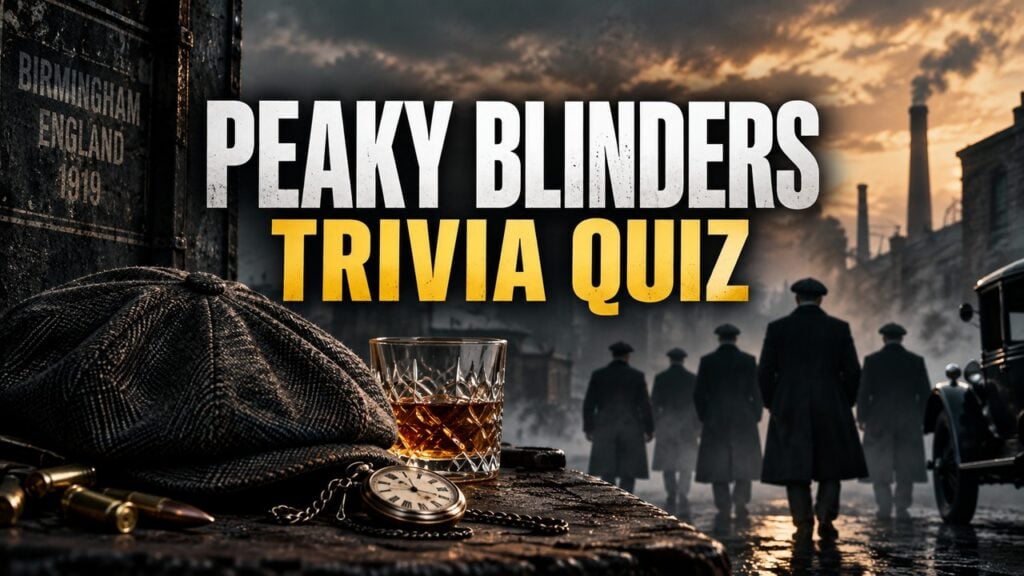
Birmingham in 1919 is full of men who came back from France with skills nobody wants and nerves nobody treats. Thomas Shelby dug tunnels under the German lines as a sapper, which is why he sleeps badly, smokes constantly and has stopped being frightened of anything a rival can do to him. The family business is illegal bookmaking, run out of a betting shop in Small Heath by the Shelby brothers under their aunt Polly Gray, who held the operation together while the men were away. A crate of guns loaded onto the wrong lorry at the local arms factory gives Tommy the leverage to start moving upward, and gives the Crown a reason to send a detective over from Belfast after him.
Steven Knight grew up in Birmingham and wrote the series out of family stories rather than archive research. He has described his father, as a boy, being sent to deliver a message to a house and finding a room of smartly dressed men with money piled on the table, and his father's uncles worked as illegal bookmakers in the city. Knight had already written Dirty Pretty Things and Eastern Promises, and had co-created the quiz show Who Wants to Be a Millionaire, which covered the years in which nobody wanted a gangster drama set in the Midlands. The BBC broadcast the first series in September 2013 and the sixth and last in 2022, with Cillian Murphy in the lead throughout.
The historical Peaky Blinders were a Birmingham street gang of the 1890s, a generation before the show's opening, and historians who have worked through the police records argue that the razor blades sewn into cap peaks are almost certainly a later invention, since disposable blades of that kind were an expensive way to ruin a hat. The name seems to have covered a general style of young men in flat caps and neck scarves. Several figures around the Shelbys were real, though. Billy Kimber ran the racecourse protection business out of Birmingham, Darby Sabini controlled the same trade in London, and Oswald Mosley, who arrives in the fifth series, founded the British Union of Fascists in 1932, having sat in parliament first as a Conservative and later for Labour.
Helen McCrory played Polly until her death in 2021, after which the character's absence was written into the final series. The look of the show was assembled from material that does not belong to 1919, including Nick Cave's Red Right Hand over the titles, PJ Harvey and Arctic Monkeys across the fight scenes, and a colour palette closer to a western than to a costume drama. Much of the street work was filmed at the Black Country Living Museum and in the dock warehouses of Liverpool rather than in Birmingham, which had demolished most of the relevant buildings decades earlier. The haircut became a standing order in barbershops across Britain, and Birmingham has hosted a festival named after a gang the city spent a century trying to forget. Answers to every question are set out below.
Questions Preview
- London
- Birmingham
- Manchester
- Liverpool
- The Sheltons
- The Shelbys
- The Kellys
- The Grays
- Arthur Shelby
- Thomas Shelby
- John Shelby
- Michael Gray
- The Boer War
- World War I
- The Crimean War
- World War II
- 1905
- 1919
- 1926
- 1933
- Razor blades sewn into their caps
- Their sharp business tactics
- Their blinding speed in fights
- Their bright cap colors
- Tom Hardy
- Cillian Murphy
- Michael Fassbender
- Paul Anderson
- The Communist Party
- The British Union of Fascists
- The Suffragette movement
- The Irish Republican Brotherhood
- Polly Gray
- Ada Shelby
- Linda Shelby
- Esme Shelby
- Al Capone
- Alfie Solomons
- Luca Changretta
- Jack Nelson
- Arthur Shelby
- John Shelby
- Finn Shelby
- Michael Gray
- The Great Depression
- His service as a tunneller on the Western Front
- The Spanish Flu
- The Irish Civil War
- Alfie Solomons
- Billy Kimber
- Darby Sabini
- Luca Changretta
- ITV
- BBC
- Channel 4
- Sky
- Darby Sabini
- Billy Kimber
- Luca Changretta
- Jimmy McCavern