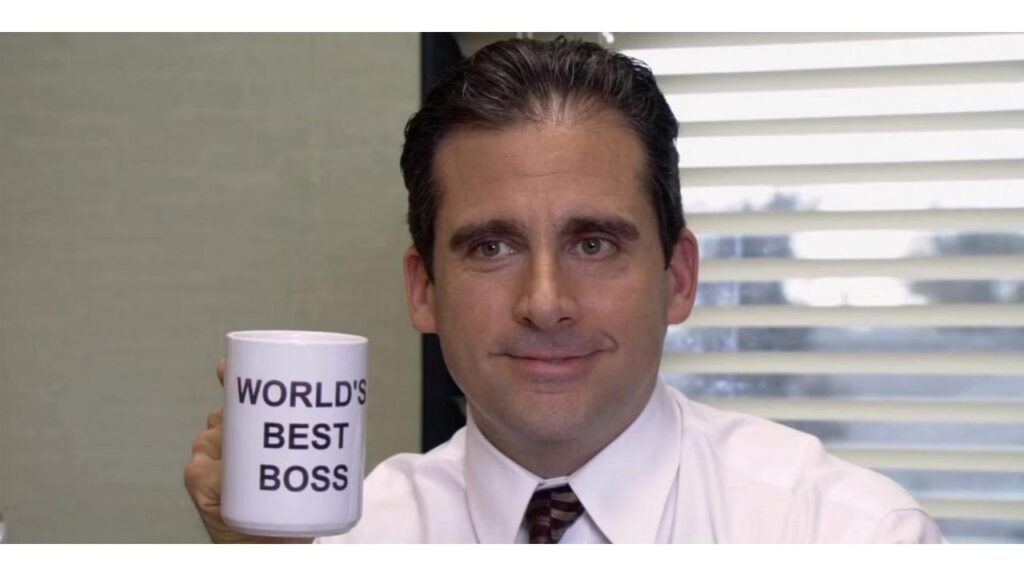
A mid-sized paper company in Scranton, Pennsylvania, is about the least glamorous setting a TV show could pick, and that’s exactly why The Office worked. A documentary crew films the everyday, mind-numbing routine of Dunder Mifflin’s Scranton branch, and instead of finding nothing worth watching, they find Michael Scott: a regional manager so desperate to be loved by his employees that he becomes one of the most quoted, cringed-at, and secretly beloved characters in sitcom history. It began as an American remake of a two-series British show by Ricky Gervais and Stephen Merchant, and NBC came close to cancelling it after a first season of six episodes that copied the original almost line for line before the writers found their own version of the branch. Nine seasons later, The Office had become one of the most rewatched comfort shows ever made, streamed by people who’ve already seen every episode a dozen times and somehow still laugh at the same jokes.
In the second-season episode “The Injury,” Michael burns his foot by stepping onto a George Foreman grill he keeps beside his bed so that he can wake up to the smell of bacon, then spends the rest of the day treating a minor burn as a disability while Dwight Schrute, who has given himself a real concussion crashing his car on the way to help, quietly deteriorates in the background. That is the show’s whole method in one episode: a small, stupid, specific detail carried much further than it should be, with the real damage happening off to the side where nobody in the office is looking.
The ensemble is what sustains that for nine years and 201 episodes. Dwight, whose business card reads Assistant to the Regional Manager and who runs a beet farm and bed and breakfast in his spare time, functions as both antagonist and most loyal employee. Jim Halpert’s pursuit of Pam Beesly plays out over years of glances at a camera the characters supposedly forgot was there, ending with a proposal in the rain at a New Jersey Turnpike rest stop. Ryan Howard talks his way from temp to corporate vice president and then into a fraud investigation. Around them sit Kevin, Angela, Creed, Meredith, Oscar and Stanley, each defined tightly enough that fans can date an episode from a single line of theirs.
Questions run the length of the series, from the Michael Scott years through the Sabre takeover and into the seasons that had to work without Steve Carell after his 2011 exit. The gentle end covers the catchphrase, the company name and Dwight’s job title. The harder end covers the title of the spy film Michael writes, directs and stars in over eleven years, the name of the Schrute property, the specific location of Jim’s proposal, and which employee ends up running the branch after everyone above them has been fired, promoted or arrested.
Rewatchers tend to clear this comfortably, since most of the answers live in details the show repeats rather than in plot turns it stages once. Which Dundie went to whom gets confirmed as soon as the results print at the bottom.
Questions Preview
- Dunder Mifflin
- Sabre Paper
- Vance Refrigeration
- Prince Family Paper
- Assistant Regional Manager
- Regional Manager
- Sales Representative
- Corporate Executive
- Assistant Regional Manager
- Assistant to the Regional Manager
- Vice Regional Manager
- Deputy Manager
- That's what she said
- Bears, beets, Battlestar Galactica
- I am not superstitious
- Fact
- Schrute Farms
- Beet Haven
- Dwight's Acres
- Mose Farm
- At the office
- At a gas station
- At a wedding
- On the roof of Dunder Mifflin
- Threat Level Midnight
- Michael's Revenge
- Danger Zone
- Scarn
- Vance Refrigeration
- Sabre
- Prince Family Paper
- Staples
- Dwight Schrute
- Andy Bernard
- Jim Halpert
- Ryan Howard
- Accountant
- Human Resources
- IT
- Sales
- Sales
- Accountant
- Warehouse worker
- Customer service
- Erin Hannon
- Angela Martin
- Kelly Kapoor
- Holly Flax
- Krampus
- Belsnickel
- Sinterklaas
- Perchta
- Live studio audience
- Mockumentary
- Anthology
- Musical
- David Wallace
- Robert California
- Jan Levinson
- Charles Miner